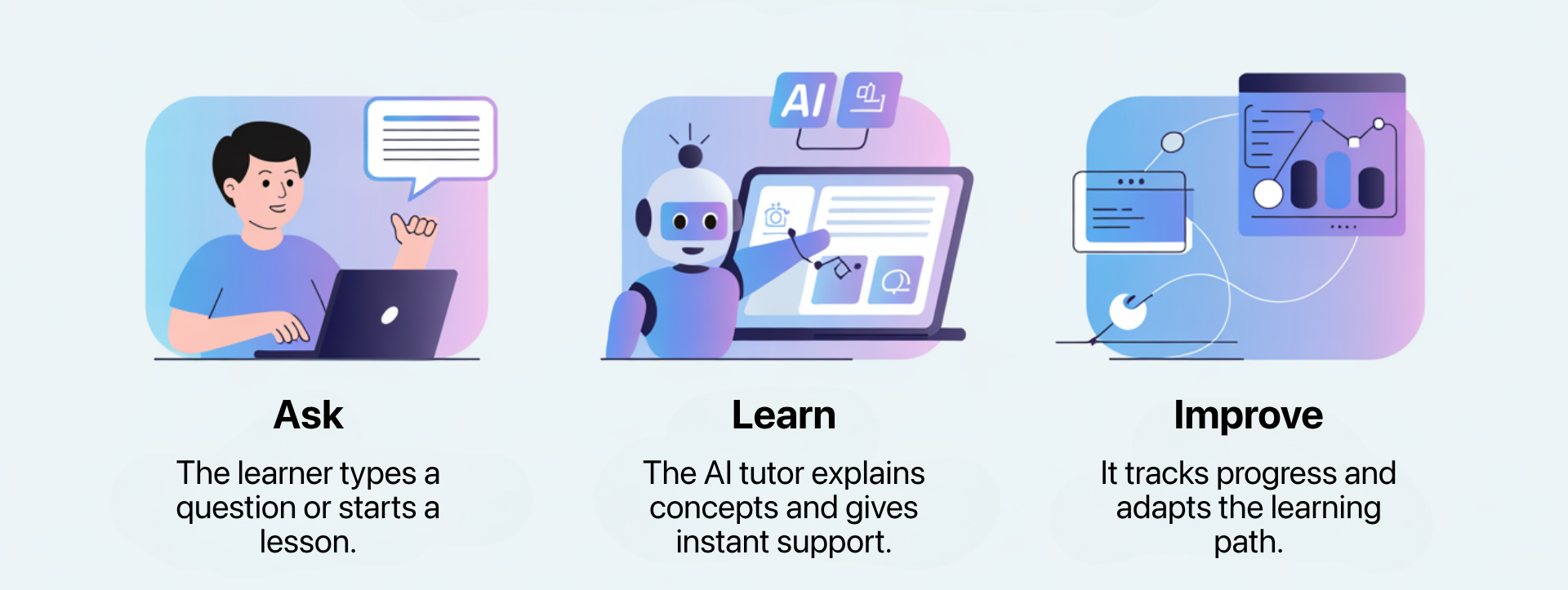


The explosive arrival of powerful generative AI like Anthropic’s Claude has thrown higher education into a whirlwind of debate. Headlines often scream about the looming threat of AI plagiarism, the potential obsolescence of traditional assignments, and fears that students will simply outsource their critical thinking. It’s a narrative steeped in anxiety. But what if this focus on the negative obscures a more profound transformation already underway?
A vital piece of the puzzle comes from Anthropic itself, in their recently published report, “How University Students Use Claude.” (You can delve into the full report here). This research, based on actual student usage data and surveys, offers a crucial glimpse into the real ways students are integrating AI into their academic lives. And the findings don’t just challenge the “cheat bot” stereotype; they powerfully underscore the urgent need for structured, education-focused AI solutions.
What the Anthropic Report Really Shows: AI as a Learning Catalyst
Instead of finding rampant, clandestine cheating as the primary use case, Anthropic discovered students are leveraging AI in surprisingly resourceful and learning-centric ways. This isn’t about replacing effort; it’s about augmenting it. Key constructive uses highlighted include:
The 24/7 AI Tutor: Students are feeding complex readings and lecture notes into Ai, asking for summaries, explanations of difficult concepts in simpler terms, and definitions. They’re essentially creating personalized tutoring sessions on demand, breaking down barriers to understanding complex material.
The Idea Incubator: Facing daunting assignments, students use Ai for brainstorming – generating initial ideas, exploring potential research avenues, and creating preliminary outlines to overcome writer’s block.
The Study Material Generator: Students prompt Ai to create practice questions, flashcards, and quizzes based on their coursework, facilitating active recall and deeper engagement with the subject matter.
The Sophisticated Writing Partner: Beyond basic grammar checks, students use AI for writing assistance to improve clarity, refine arguments, and structure their thoughts more effectively – focusing on enhancing their own writing process.
The Technical Assistant: For STEM students, Ai becomes an invaluable tool for coding, helping debug code, explain complex functions, and even translate between programming languages.
Furthermore, the report notes students are developing nascent AI literacy. They show awareness of AI’s limitations, potential for bias, and the need for fact-checking. They are grappling with the ethics and trying to navigate responsible use.
The Crucial Gap: From Ad Hoc Use to Structured Integration
The report paints a clear picture: students are finding value in AI for learning. They are resourceful and adaptive. However, this usage is often happening in an unstructured, ad hoc manner, outside the formal educational framework. This presents significant challenges and risks:
Inconsistency: Without guidance, the quality and effectiveness of AI interaction vary wildly.
Ethical Gray Areas: Students are often left to navigate complex ethical questions about appropriate use and citation alone.
Missed Pedagogical Opportunities: Educators lack visibility into how students are using these tools and struggle to integrate them effectively into curriculum design and assessment.
Academic Integrity Concerns: While not the only use, the potential for misuse remains a valid concern for institutions lacking robust frameworks and tools.
Inefficiency: Students might spend considerable time wrestling with general-purpose AI tools not specifically optimized for educational tasks or aligned with learning objectives.
The Anthropic report, therefore, doesn’t just describe current behavior; it implicitly highlights a critical need. A need for tools and platforms designed specifically for the educational context. A need for solutions that harness the power of AI but within a structured, safe, and pedagogically sound environment.
A New Breed of AI Services: Bridging the Gap Revealed by Anthropic's Insights
This is precisely where a new breed of AI-powered educational platforms step in. The trends identified by Anthropic – students seeking AI for tutoring, brainstorming, writing support, and skill development – perfectly validate the mission behind dedicated services. While general tools like Claude, Chat GPT and Gemini show the potential, ed-focussed services aim to operationalise that potential effectively and ethically within education
Imagine leveraging the power observed in the report, amplified through a purpose-built platform.
Instead of generic AI interactions, it offers structured learning support through AI tutoring specifically aligned with course curricula, guided study pathways, and targeted feedback designed to enhance understanding rather than just providing answers.
Furthermore, they deliver enhanced writing assistance focusing on clarity, argumentation, and style, crucially incorporating built-in checks and guidance on academic integrity, proper citation, and avoiding plagiarism to directly address institutional concerns.
Rather than leaving students to learn haphazardly, these platform integrate modules to systematically build verifiable AI literacy, teaching effective prompting, critical evaluation, and ethical usage principles in a trackable manner.
Beyond the student experience, this provides essential tools for educators and institutions, offering insights into student engagement, resources for constructive AI integration into assignments, and support for implementing effective AI policies, thereby granting necessary visibility and control.
All this occurs within a safe and focused environment dedicated to AI-powered learning, minimizing the distractions and pitfalls associated with using general-purpose AI tools for academic work.
The Future Isn't Banning AI; It's Integrating it Intelligently
The report powerfully suggests that the tide of AI in education is irreversible. Students are already voters with their usage patterns, demonstrating a clear desire for AI-driven learning support. The question for institutions is no longer if AI will be used, but how it will be integrated.
Attempting to ban these tools, as the report implies, is likely futile and counterproductive. It ignores the genuine learning benefits students are discovering and fails to prepare them for an AI-infused future workforce. The path forward lies in embracing solutions that channel AI’s capabilities constructively.
At LRND we embrace this forward-thinking approach. It acknowledges the reality revealed by Anthropic’s research – students want to use AI to learn better – and provides the framework to do so effectively, ethically, and in alignment with educational goals. It transforms AI from a potential disruptor into a powerful pedagogical partner.
Take the Next Step Towards AI-Enhanced Education
The insights from Anthropic’s report are compelling. They show a student body eager to leverage AI for learning, even with general tools. Now, imagine equipping them, and your institution, with a platform built from the ground up for this purpose.
Don’t just read about the future of AI in education – help shape it. Explore how LRND.AI is turning the potential revealed by studies like Anthropic’s into practical reality.
Make the first step and enjoy the journey!

- No limited trial period
- No upfront payment
- No automatic renewal
- No hidden costs