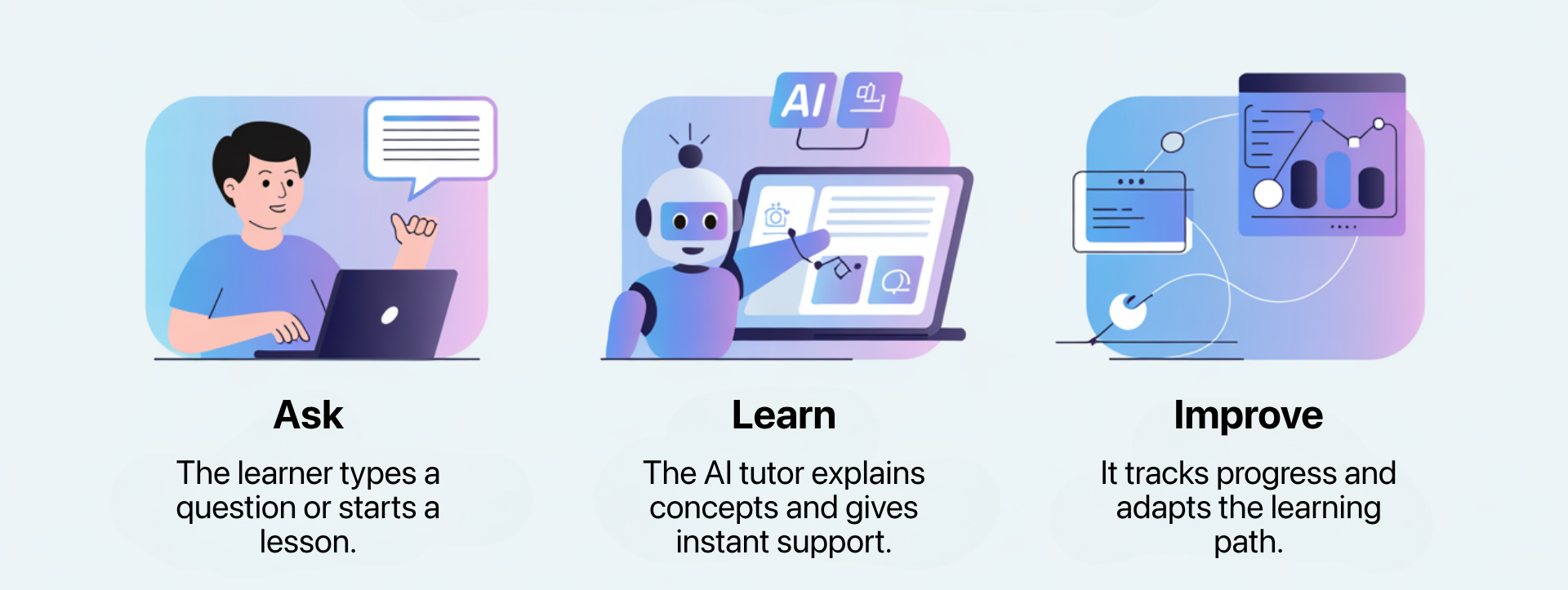


One of the more recent and, let’s admit it, paradigm-jostling developments transforming education is the sudden emergence of generative AI—a kind of digital Prometheus that promises to revolutionize how we teach, learn, and think. Like all great techno-revolutions (think printing press, radio, Napster), this one arrives with a breathless optimism wrapped in caution tape. The promises? Hyper-personalised learning experiences, broader access to high-quality content in remote regions, and AI sidekicks for educators burdened by administrative minutiae. In theory, it’s all slick dashboards and tailor-made lesson plans from here on out.
For educators, generative AI tools represent a veritable Swiss army knife: helping to generate content, draft assessments, and even handle that cursed limbo of scheduling and grading. Meanwhile, students can receive support attuned to their learning styles, abilities, and pace—whether they’re visual learners in a bustling urban classroom or a solitary student studying under a flickering bulb in rural Sudan. The dream? That AI closes gaps, not widens them. But we’ve been here before.
Because—surprise!—utopias tend to come with terms and conditions.
Much like its algorithmic cousins in social media, AI in education brings a tangled web of complexities: baked-in bias, inequitable access, data privacy nightmares, and, perhaps most insidiously, an erosion of the very human skills we’ve traditionally treasured—like the ability to write, think, or disagree with nuance. If our students outsource every essay, every thought experiment, every muddled first draft to ChatGPT, what happens to their capacity to wrestle with ambiguity or find their own voices?
We must also contend with the charmingly dystopian idea that AI-generated content may not just be biased, but wrong—confidently, convincingly, dangerously wrong. And if young learners can’t discern between a hallucinated fact and a verified one, are we helping them become better thinkers or simply more agreeable consumers?
Then there’s the reality of the digital divide. According to a recent UNICEF and ITU report, nearly two-thirds of school-age children globally lack internet access at home. So while we gush about personalised AI tutors and algorithmic learning companions, the vast majority of the world’s children remain on the outside of this “revolution,” their educational trajectory still shaped more by geography than technology.
Possible Future Scenarios
Let’s play futurist—cautiously, but with a good espresso shot of imagination. Picture a classroom not far off from now where generative AI tailors content minute by minute, responding to biometric signals and real-time emotional cues. A student floundering with Newton’s Third Law might receive a poetic metaphor, an interactive simulation, or a rap battle between inertia and acceleration—all generated on the fly, all dazzlingly personal. Which sounds amazing, until you consider the attention span of the average teenager and the fact that even AI can’t stop someone from watching cat videos during a virtual lab.
Then there’s the looming Uber-ization of teaching. Imagine a decentralized workforce of AI-augmented “learning facilitators,” rating each other on engagement metrics, logging in from Bali or Berlin, while being monitored by analytics dashboards so granular they’d give Orwell a migraine. Traditional schooling splinters into micro-learning pods. Forget diplomas; blockchain-certified skill stacks become the new currency of competence. Flexibility skyrockets—but so might burnout, alienation, and the nagging sense that learning has become just another gig.
Now add this to the mix: AI-powered knowledge management platforms—the brains behind the operation. These systems don’t just store information, they understand it, connect it, and serve it up on demand, adapting to each learner’s needs like an omniscient librarian who never sleeps. Imagine students accessing a dynamic, living archive of global knowledge—curated, synthesized, and constantly evolving—while teachers use the same platform to build courses, assess mastery, and collaborate across time zones. This is the good part. The inspiring part. But beware the risks: these platforms may consolidate control over what counts as “authoritative knowledge,” and if left unchecked, could create epistemic echo chambers or algorithmic orthodoxy. When a platform decides what’s worth knowing, education becomes less about inquiry and more about compliance.
In all these scenarios, the promise is seductive: more personalization, more efficiency, more “just-in-time” brilliance. But underneath it all lurks the question education has always wrestled with—are we building better learners, or just better data profiles?
Challenges and Ethical Considerations
While the potential of AI is immense, so are the challenges it poses. Issues such as the digital divide, data privacy, and ethical governance must be addressed if AI is to benefit all of humanity.
First, bridging the digital divide is crucial. To ensure equitable access to AI technologies, particularly in the Global South, we must invest in digital infrastructure and promote digital literacy. Without these foundational elements, the benefits of AI will remain out of reach for many.
Second, data privacy is a critical concern. As AI systems rely on vast amounts of data, we must develop stringent guidelines for data use and ensure individuals’ privacy is protected. We also need to address the biases embedded in AI algorithms and ensure transparency and accountability in AI systems.
Third, AI is reshaping the world of work. While it will create new job opportunities, it also poses the risk of job displacement. Even as millions of jobs face ruthless displacement, a wave of new opportunities is quietly taking shape. To manage this transition, we need comprehensive workforce development strategies, including reskilling and upskilling initiatives. AI itself can help facilitate these efforts by offering personalised training programmes to help workers acquire new skills and transition to emerging roles.
Educational institutions will play a pivotal role in this. They must adapt to prepare students not only with technical skills but also with critical thinking, creativity, and emotional intelligence—skills essential for thriving in an AI-driven world.
Conclusions (?)
So where does that leave us—wide-eyed dreamers or doomsday skeptics? The truth, as always, lies somewhere messily in-between. Generative AI in education is neither salvation nor scourge; it’s a tool, albeit one with sharp edges. The future of learning will hinge on how intentionally we wield it. If we prioritise ethical AI development, robust digital literacy, and ensure inclusive infrastructure, we might just navigate these waters with some grace.
But let’s not kid ourselves. There is no silver-bullet solution. There is only the hard, often unsexy work of policymaking, teacher training, infrastructure investment, and philosophical soul-searching. As machines grow smarter, our definition of intelligence—and education—must evolve accordingly. The real challenge isn’t to outsmart AI, but to rediscover and amplify what makes us deeply, stubbornly human in a world increasingly coded in 1s and 0s.
Make the first step and enjoy the journey!
- No limited trial period
- No upfront payment
- No automatic renewal
- No hidden costs