

When Answers Become Too Easy
We live in a strange moment.
Not long ago, learning something new required an actual journey—finding a teacher, visiting a library, struggling through a textbook, asking someone wiser than you for guidance. The process was slow and sometimes frustrating, but it also carried a certain dignity. You earned what you knew.
Now? You type a question, and in seconds you have a neatly packaged answer, sometimes better than a human tutor could have offered. It’s impressive. It’s convenient. And it’s quietly dangerous.
Because when answers become too easy, learning becomes something we might accidentally skip—not intentionally, but out of sheer habit. Why wrestle with an idea when a machine will just tell you what to think?
But there’s another way to use AI, one that doesn’t flatten learning into instant information. It’s the idea of AI not as an answer machine, but as a co-learner—a partner in curiosity, a companion in exploration, a tool that helps you think rather than simply respond.
It sounds subtle, but it’s a shift that changes everything.
The End of Scarcity, and the Beginning of Something Else
For most of human history, knowledge was scarce. You learned what your teacher knew. You read the books your town happened to have. You studied the subjects your school offered. You could go through your entire life never knowing that entire domains of thought even existed.
Scarcity shaped us. It made education linear and rigid. You climbed your way up a predefined ladder.
But now the bottleneck has flipped.
Knowledge is no longer the thing we lack. What we lack is structure.
We lack grounding, context, prioritisation. We lack the mental scaffolding that lets information turn into understanding.
Your challenge today isn’t “How do I access knowledge?”
It’s “How do I make sense of a world where knowledge has exploded beyond comprehension?”
This is where AI, used intentionally, can become a powerful learning partner. But only if we stop treating it like a vending machine for answers.
Why the ‘AI as Tool’ Mentality Is Too Small
The default way people use AI right now is transactional. They ask a question, get a tidy answer, and move on. The interaction is shallow, functional, and ends the moment the answer appears. And that model isn’t wrong; it’s just incomplete.
Tools are designed to eliminate effort.
Learning, on the other hand, requires effort.
That’s the tension.
A tool gives you the result.
A co-learner draws you into the process.
A tool makes things faster.
A co-learner makes things deeper.
A tool replaces your thinking.
A co-learner expands it.
And the difference has nothing to do with the AI itself. It has everything to do with how you use it. A hammer can build a shelf or shatter a window. AI can compress your mind or enlarge it.
To use AI as a co-learner, you have to be willing to engage in a different kind of conversation—one that invites back-and-forth, ambiguity, curiosity, and reflection.
The Idea of a Personal Learning Ecosystem
If you want AI to become part of your learning, you need something bigger than prompts. You need a learning ecosystem—a set of habits, tools, mental models, and rituals that shape how you interact with information.
Most people drift into a chaotic learning ecosystem without realizing it. Their inbox, their notes app, a few YouTube rabbit holes, and whatever TikTok video happened to show up that week. It’s accidental, fragmented, and constantly driven by whatever is most recent or most urgent.
A well-designed learning ecosystem is the opposite. It’s deliberate. It’s shaped around curiosity rather than convenience. It’s not a collection of apps; it’s a way of learning that grows with you.
And AI becomes an incredibly powerful part of that system when you let it support—not replace—your thinking.
Curating What Matters When Everything Is Available
The first challenge in modern learning isn’t understanding. It’s choosing. When every topic has a hundred courses, a thousand videos, and a million blog posts, curation becomes the most important intellectual skill you can have.
This is where AI can be surprisingly human-like when used well.
It can help you map a domain.
It can show you which ideas are foundational and which are fringe.
It can help you sequence concepts so that one naturally builds on another.
The key is not to ask it for “everything about X.” That leads straight back into overload. Instead, ask it to help you decide what not to spend time on. Ask what matters most for the person you are now, not the theoretical expert you might become someday.
A good question to ask is:
“What is the smallest set of ideas I need to understand before this field starts making sense?”
That one question alone can save you weeks of wandering.
Exploring Ideas Instead of Copying Answers
Once you know what to focus on, the next step is exploration. Not in the sense of immediately trying to master a subject, but in the slower, more playful sense of wandering. This is a lost art in an age where everything is expected to be optimized and efficient.
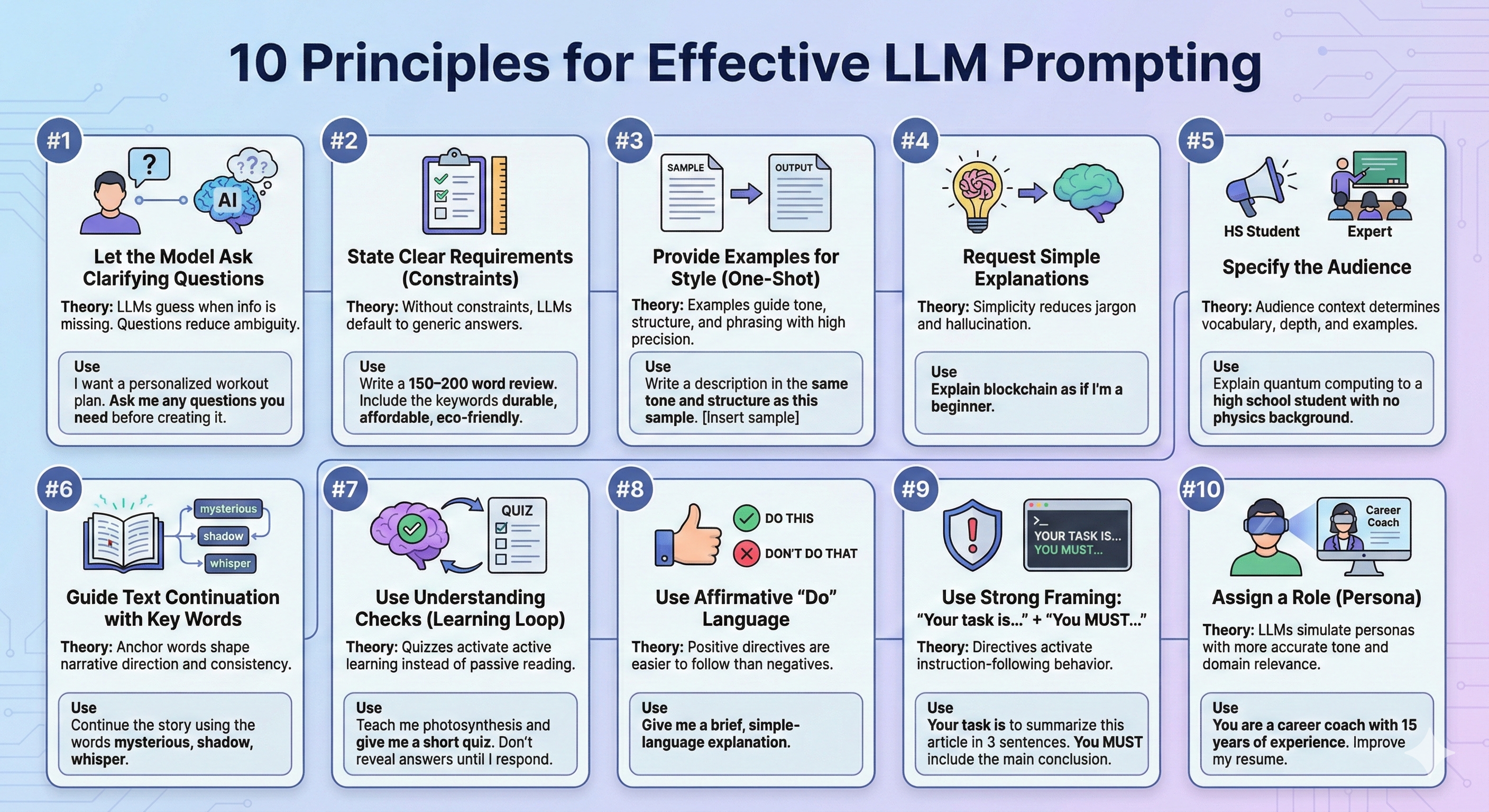
AI becomes a wonderful companion in exploration because it can stretch an idea in any direction you want. You can ask it to show you a concept through the eyes of a philosopher, then a comedian, then a physicist, then a five-year-old. You can ask it what people typically misunderstand. You can ask it for counterintuitive takes, historical roots, future implications.
In other words, you can turn a single idea into a dozen perspectives in minutes.
Not because you want to “know everything,” but because exploration deepens curiosity—and curiosity deepens learning.
Building Understanding, Not Just Storing Information
We’ve all had the experience of reading something, nodding along, and then realizing later that we didn’t understand it at all. Understanding is fragile. It takes time. It takes friction. And it often requires someone to question you gently, the way a good teacher does.
This is where AI, surprisingly, excels. If you allow it to, it can become a kind of Socratic mirror—reflecting your words back to you, asking why, challenging your assumptions, probing the gaps.
If you try explaining an idea to AI, it can tell you exactly where the explanation stops making sense. If you summarize something you’ve learned, it can point out what you missed. If you try to reason through a problem, it can identify the step where your logic quietly slipped.
This is not about the machine being smarter than you.
It’s about the machine helping you see your own thinking clearly.
Understanding grows when you see your blind spots.
AI helps you see them faster.
Integration: Where Learning Becomes Life
There is a moment in learning where information stops being interesting and starts becoming relevant. This is the moment when learning begins to integrate with your life—when you start seeing examples of it in your work, your conversations, your decisions.
AI can help with this too, but again, only if you ask it to. You can ask for practical use cases. You can ask how the idea applies to your job, your goals, your habits, or your projects. You can ask it to design a daily ritual that reinforces the concept in small ways. You can ask it to translate an abstract idea into a behavior you can actually execute.
The point isn’t to automate your life. It’s to make learning active.
To transform abstract knowledge into lived experience.
A Day with AI as Co-Learner
What does this look like in practice? Not a complicated system. Not a meticulously optimized workflow. Something much simpler.
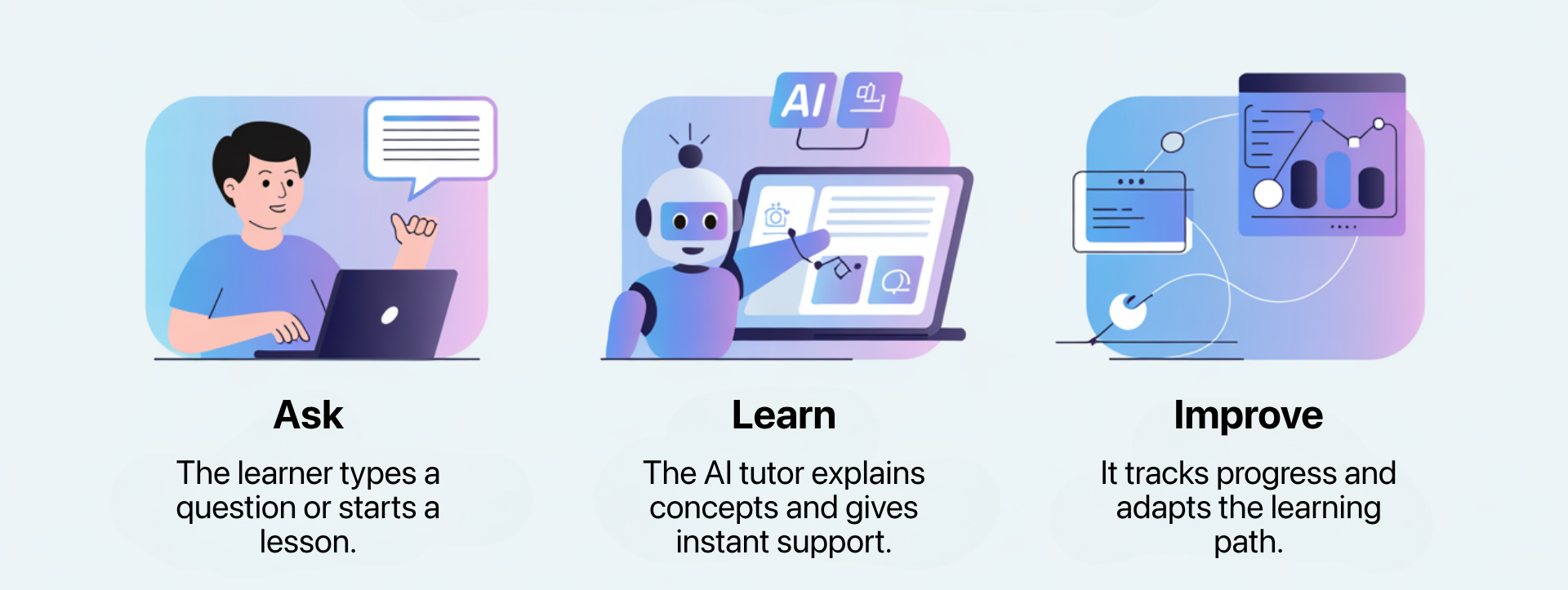
You begin your day by noticing what you’re curious about—some idea, some problem, some concept that feels alive. You bring it to AI not as a task but as a conversation. You ask it to expand the idea, to challenge it, to reinterpret it, to help you understand it from angles you wouldn’t have seen alone.
Later, when you think you’ve understood something, you return to the conversation. You explain. You test yourself. You ask it where your thinking falls apart. You let it push back gently.
And then, once something clicks, you ask it to help you apply it. To turn the idea into something you can do, not just something you can say. The learning becomes part of your day rather than something separate from it.
This is the essence of co-learning. It’s not about speed. It’s not about quantity. It’s about depth and connection.
The Psychological Shift That Changes Everything
When you treat AI as a co-learner, something subtle changes. You stop approaching knowledge like a race and start treating it like a relationship. You become less anxious about not knowing things because you have a partner to explore with. You become more comfortable with complexity because you don’t have to hold it all alone. You become more curious because the process itself becomes enjoyable again.
And perhaps most importantly, learning becomes dialogue rather than consumption.
It becomes a back-and-forth.
A shared journey.
A conversation.
This is something we lost in the era of static textbooks and search engines.
And it’s something AI has the potential to give back.
The Future: The Hybrid Mind
Humans think in stories, emotions, intuitions, and questions. Machines think in patterns, data, memory, and scale. Alone, each has limits. Together, they create something new—a hybrid intelligence where each complements the other.
This is the future of learning. Not outsourcing your brain, but expanding it. Not becoming dependent, but becoming augmented. Not thinking faster, but thinking richer.AI as co-learner is the beginning of that future.
A future where learning becomes conversational, personal, continuous, and deeply human.
Make the first step and enjoy the journey!
- No limited trial period
- No upfront payment
- No automatic renewal
- No hidden costs