

Introduction: The Most Important Skill We’re Forgetting
We talk a lot these days about what AI can do.
It can summarise, explain, translate, calculate, analyse, and generate. It can write in any style, from Shakespeare to corporate boilerplate. It can code a website, draft a contract, or plan a holiday. Its capabilities continue to expand in ways that seem almost unfair.
But there’s one thing AI can’t do unless you ask it to—one thing so central to being human that we often forget it’s even a skill:
thinking about your thinking.
Metacognition.
The quiet art of stepping outside your mind to observe how it works. The habit of questioning your assumptions, noticing your biases, examining your reasoning, catching your shortcuts, and understanding your own understanding.
It’s the mental skill that turns information into insight, and insight into wisdom.
The strange irony is that the easier AI makes thinking look, the less we tend to do this kind of thinking ourselves. When answers appear instantly, reflection evaporates. When the friction of learning disappears, so does the awareness of how our minds are moving.
But AI can be more than an answer machine.
It can be a mirror.
A provocateur.
A quiet challenger.
A kind of mental climbing partner, pulling you upward.
If you know how to prompt it.
This article is about that—how to ask AI questions that help you understand not just the world, but your own mind.
The Danger of Invisible Thinking
Most of our thinking happens silently and automatically. We rely on shortcuts—rules of thumb, memories, analogies, cached patterns of judgment. It’s not a flaw; it’s how the brain stays efficient. If we had to consciously evaluate every thought, we would never get anything done.
But that autopilot mode comes with blind spots. We confuse familiarity with understanding. We treat intuition as truth. We mistake coherence for correctness. We think we’re thinking when we’re actually just rehearsing something we picked up years ago.
Without metacognition, learning becomes a performance.
With metacognition, learning becomes transformation.
AI can help restore that transformation—if you let it interrogate your process rather than just answer your questions.
Why Asking for Answers Is Too Small
The way most people use AI is fundamentally passive.
“I don’t know this—tell me.”
“What’s the right answer?”
“Write this for me.”
This strips thinking out of the equation entirely. It’s consumption disguised as learning.
But learning isn’t about obtaining an answer. It’s about reshaping the mind that receives the answer.
If you want AI to be part of your thinking life, you need to ask it something more interesting than “What’s the answer?”. You have to invite it into the process—your confusions, your doubts, your half-formed intuitions, your premature conclusions.
AI becomes a thinking partner when you stop asking it to finish your thoughts, and start asking it to deepen them.
The Gentle Art of Thinking About Your Thinking
Metacognition sounds lofty, but in practice, it’s simple.
It begins with an awareness that your thoughts are not transparent to you.
You don’t automatically know why you believe something.
You don’t automatically know where your reasoning is fragile.
You don’t automatically notice your biases until someone points them out.
AI can play that role—not because it’s smarter, but because it can offer a perspective that is entirely decoupled from your habits.
A good metacognitive interaction with AI feels less like asking for information and more like having a conversation with someone who is gently holding up a mirror. It can be uncomfortable, in the way that growth often is.
But it’s also profoundly clarifying.
The Conversation You Should Be Having with AI
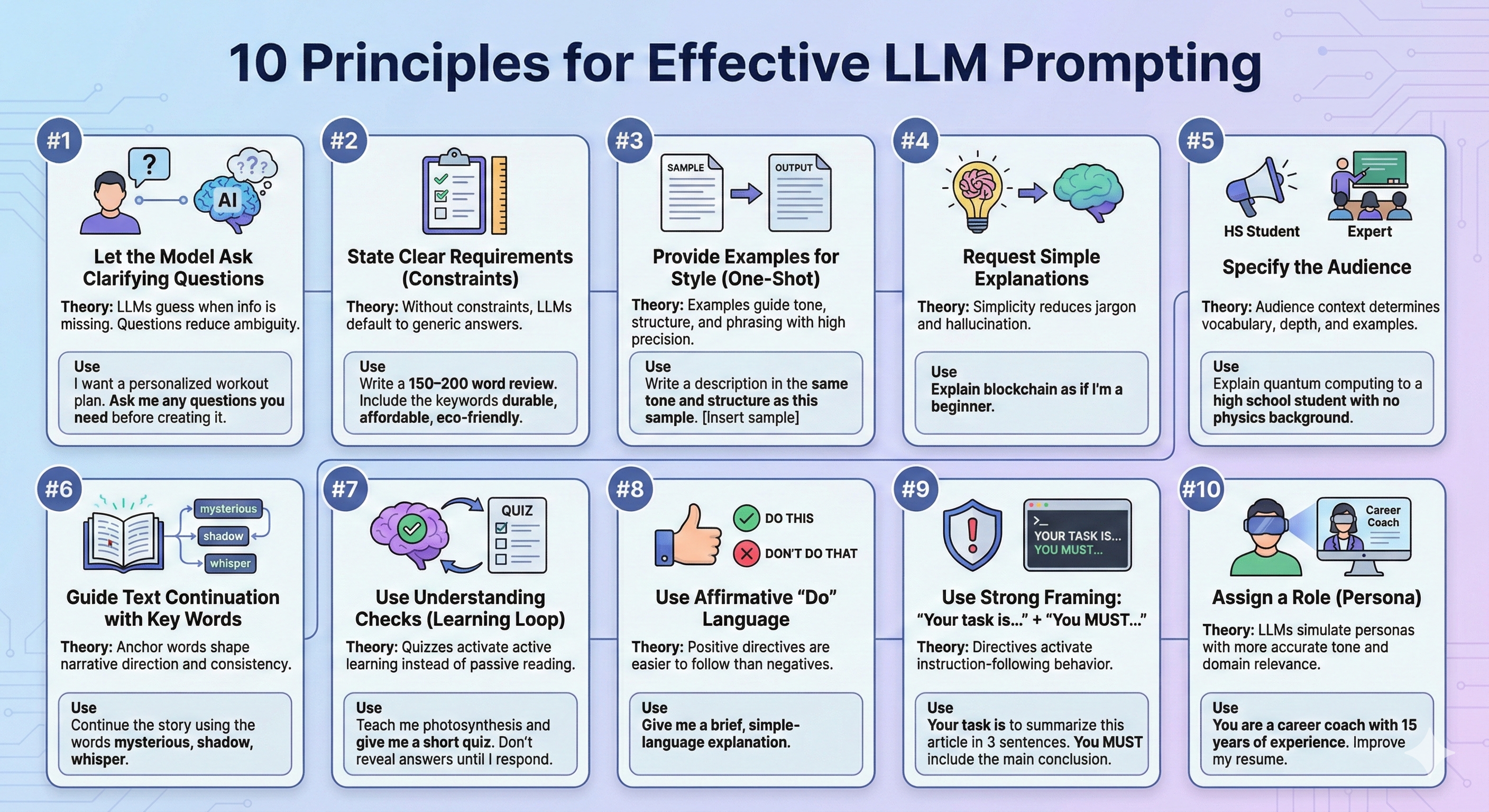
Imagine you have an idea, a belief, or a problem you’re trying to solve. You could ask AI directly for the solution. But there’s a different kind of prompt—one that invites AI to examine the shape of your thinking instead of replacing it.
Something like:
“I’m trying to understand how I’m thinking about this. Help me see my assumptions.”
Or:
“Tell me where my reasoning feels fragile or incomplete.”
Or:
“What mental model am I implicitly relying on without realizing it?”
These questions don’t outsource your thinking—they strengthen it. They pull your thought process out of the shadows and into the open, where it can be refined.
When you ask AI about your thinking, you become less concerned with being right and more interested in understanding how your mind is constructing its version of rightness.
This is metacognition.
Prompt-driven metacognition.
Understanding Your Blind Spots
We all have cognitive blind spots—areas where our thinking consistently fails, gets lazy, or becomes overconfident. Humans don’t notice their own blind spots because, by definition, blind spots are invisible.
Here’s the trick: AI has different blind spots.
Not better, not worse—simply different.
When your thinking intersects with an intelligence that has an entirely different set of assumptions, patterns, and errors, the contrast becomes illuminating.
It might notice that your argument jumps too quickly.
Or that your explanation lacks causality.
Or that your conclusion is plausible but unjustified.
Or that your definition is inconsistent.
Or that your mental model only accounts for the case where things go well.
AI doesn’t shame you for these gaps. It simply points them out. And once you see a blind spot, it’s no longer blind.
This kind of feedback is rare in human conversation; we tend to be too polite or too distracted to offer it. The machine, however, has no such hesitation. It will faithfully reveal the structure of your thinking, if you ask it to.
Explaining Yourself to Understand Yourself
There’s a powerful learning phenomenon called the Feynman Technique: if you can’t explain something simply, you don’t really understand it.
When you try to explain an idea to AI, something interesting happens. The explanation itself becomes a diagnostic tool. As you articulate the idea, you hear the holes in your own reasoning. When you hit a part that feels fuzzy, you feel a tiny internal wobble. When you get something wrong, the AI can gently surface the inconsistency.
You learn by explaining.
You understand by testing.
You think by articulating.
With AI, this becomes a loop.
You explain until you notice a gap.
You try again.
You refine.
You discover what you actually know and what you only think you know.
This is metacognition in motion.
The Importance of Productive Discomfort
You can tell you’re doing metacognitive work when you feel a certain kind of discomfort—not anxiety, not frustration, but a softer, more constructive kind of tension.
It’s the feeling of realizing you assumed something without noticing it.
Or that your argument was only one-sided.
Or that your belief was inherited rather than chosen.
Or that your mental model was too shallow.
AI can help create this discomfort in a way human conversations rarely do. Humans often soften feedback for social reasons. AI doesn’t. It simply reports what it sees in your reasoning.
This is not a flaw.
It’s a feature.
It’s the very thing that makes it a good partner for metacognition.
The point isn’t to be humbled.
The point is to grow.
Thinking with AI Rather Than Through It
The deepest shift in metacognitive prompting is this:
you are not using AI to think for you; you are using it to think with you.
AI becomes a kind of cognitive scaffolding. It doesn’t supply the architecture of your thoughts, but it helps you notice the beams and supports you didn’t realize were shaping the structure.
When you reflect on your thinking with AI, you begin to understand yourself the way a good writer understands their own voice—not by accident, but by attention.
Your thoughts become more deliberate.
Your beliefs become more examined.
Your reasoning becomes more transparent.
This is what it means to think with AI.
Not faster.
Not lazier.
But clearer.
The Loop of Metacognitive Prompting
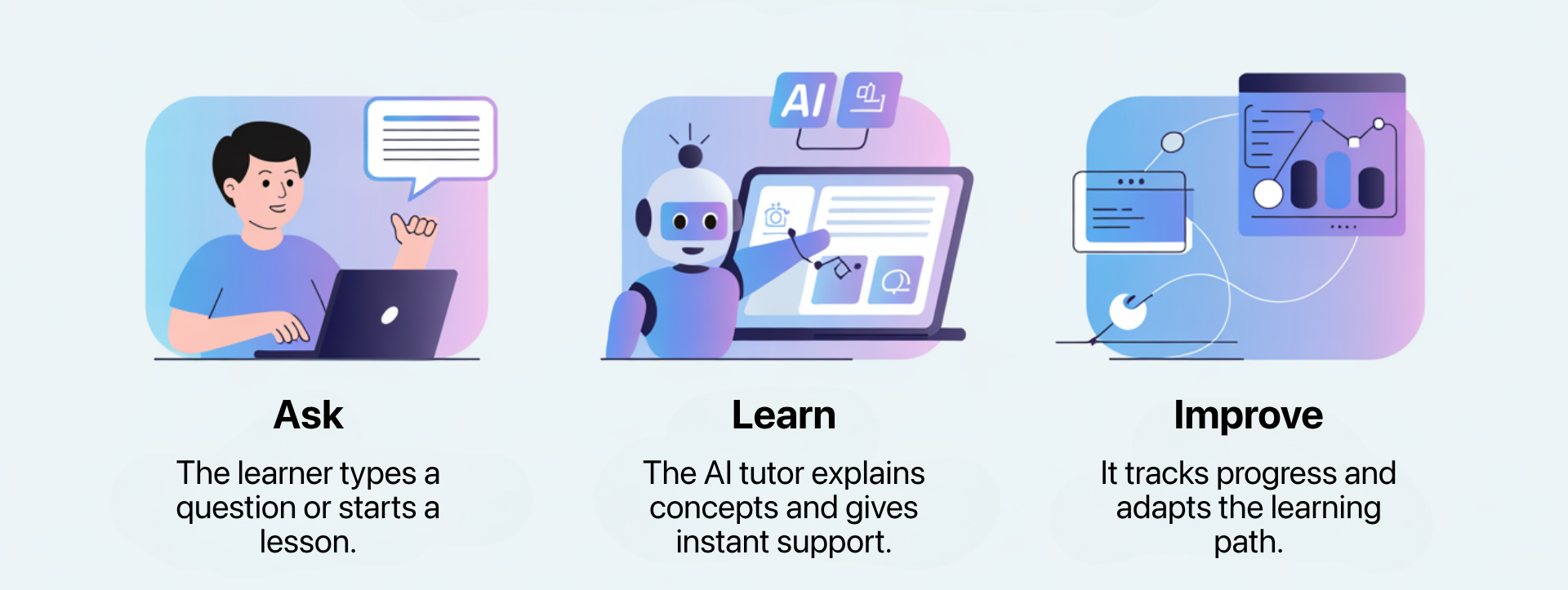
The beauty of thinking about your thinking with AI is that it naturally becomes a loop—an iterative conversation that sharpens you over time.
You start with a question.
You articulate what you think.
The AI reflects something back.
You notice something new.
You revise.
It revises your revision.
Eventually, you reach a point where you are no longer improving the answer—you are improving yourself.
The loop ends not when things become clear, but when you become clearer.
Why This Matters More Than Ever
AI accelerates thinking.
But accelerated thinking without metacognition is just faster confusion.
As AI becomes more integrated into our lives, our biggest risk isn’t that it will become too smart. It’s that we will become too passive. Too quick to accept. Too quick to defer. Too quick to let the machine carry our cognitive load.
Metacognitive prompting is the antidote to that drift.
It keeps you engaged.
It keeps you aware.
It keeps you human.
The future belongs to people who can think with AI, not people who think by AI.
Conclusion: The Mirror That Helps You Grow
AI, used unintentionally, can make us shallower.
AI, used intentionally, can make us deeper.
The key is metacognition—learning to ask not just “What should I think?” but “How am I thinking?” and “Why do I think this way?”
When you invite AI into this process, it becomes a quiet partner in your ongoing self-understanding. Not a teacher. Not a judge. Not a replacement. But a mirror.
And sometimes, seeing your own mind reflected back at you is the most powerful kind of learning there is.
Make the first step and enjoy the journey!

- No limited trial period
- No upfront payment
- No automatic renewal
- No hidden costs