

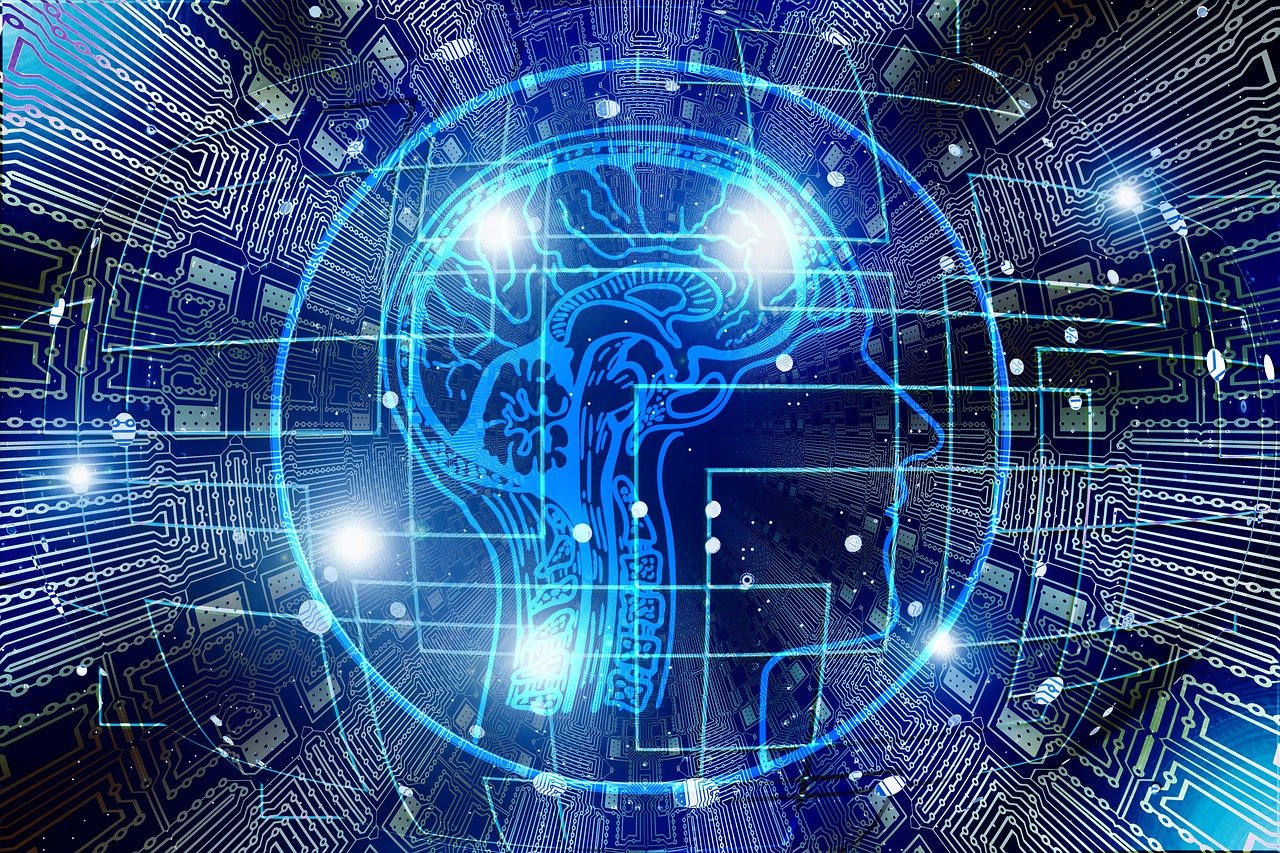
I. A New Kind of Mind Emerges
There’s a moment that’s becoming increasingly common. You’re working through an idea—something complex, something just out of reach—and instead of turning to a colleague, a book, or your own long stare out the window, you open a chat window and type a few words. The machine responds with clarity you didn’t expect. It reframes your question. It offers angles that feel familiar yet subtly alien. And suddenly, you’re thinking differently—not because you outsourced your thinking, but because something in the exchange nudged your own mind into motion.
This is the early shape of the hybrid brain.
For most of history, thinking has been a solitary act. Even when we collaborate, we bring our individual minds to a shared conversation. But now there is something else in the room—an intelligence that is not human, not emotional, not intuitive in the way we are, yet startlingly good at amplifying certain parts of our cognition. When we interact with these systems thoughtfully, our minds change not by diminishing, but by expanding. We learn to hold more possibilities at once. We learn to question our assumptions faster. We learn to see patterns we wouldn’t have noticed alone.
The hybrid brain is not a fusion of human and machine. It is a collaboration at the boundary of two kinds of intelligence. The machine brings speed, recall, breadth, and pattern synthesis. The human brings meaning, intention, judgment, and the ability to care about what matters. Neither replaces the other; they contour each other. The machine pulls the human mind outward; the human pulls the machine’s outputs inward, grounding them in context and value.
But this collaboration is delicate. It requires awareness. Left unexamined, the machine’s voice can flatten your thinking into something generic. Used consciously, it can bring out aspects of your mind that would remain dormant otherwise. The hybrid brain is neither superior nor inevitable—it is simply possible. Whether it becomes powerful or hollow depends entirely on how we inhabit this partnership.
II. Thinking With, Not Through, the Machine
Something changes when you stop treating AI as an oracle and start engaging with it as a counterpart. Instead of asking it for conclusions, you begin asking it for provocations. Instead of asking for finished ideas, you ask it to push your unfinished ones. Thinking becomes less about extraction and more about exploration. The machine becomes a lens rather than a crutch.
This shift is subtle but profound. When you think through the machine, you accept its framing. Its structure becomes your structure. It becomes the silent architect of your reasoning. But when you think with the machine, you maintain authorship of the thought. The AI becomes a surface you push against, a partner in tension. You don’t let it finalize your ideas; you let it disturb them, expand them, complicate them, clarify them.
The most interesting thoughts often happen in the space between your mind and the machine’s response. You read what it offers, feel the friction, and suddenly discover a new angle—not because the AI “knew” it, but because your reaction to its output revealed something in you. It’s a bit like talking to someone who doesn’t share your assumptions. The differences force you to articulate what you truly believe. The contrast sharpens the edges of your thinking.
This is where the hybrid brain becomes visible: in the moments when the interaction with AI reveals more about your own mind than about the machine’s. You begin noticing the predictable patterns in your thinking—the shortcuts, the blind spots, the way you cling to certain explanations even when better ones appear. AI mirrors these tendencies back to you. It becomes a kind of diagnostic tool for your cognition, not by analyzing you, but by offering alternative possibilities that expose the shape of your defaults.
Used this way, the machine doesn’t make you smarter. It makes you more aware of how you are smart. Its value is not intelligence; its value is contrast. And that contrast allows you to think in ways that were previously inaccessible—not because they were impossible, but because you didn’t have the right partner to push you into them.
But this also comes with a responsibility. You must stay conscious of where the human ends and the machine begins. If you let the boundary blur, you risk adopting the machine’s style of thought as your own. The hybrid brain works only when you remain a distinct half of the partnership. You must preserve your intuition, your questions, your emotional radar, your sense of resonance and meaning. These are the parts the machine cannot supply. Without them, thinking becomes efficient but empty.
III. Becoming the Author of the Partnership
The hybrid brain is not automatic. It is something you cultivate. It begins with a deliberate choice: to remain the author of your thinking even while collaborating with an intelligence that can outpace your memory and outproduce your ideas. This is not a matter of resisting the machine, nor of surrendering to it. It is a matter of positioning yourself correctly within the dialogue.
To be the author of the partnership means you decide the direction. You decide the intention. You decide when a machine’s answer is merely convenient and when it’s genuinely illuminating. You decide which insights resonate with your lived experience and which feel hollow. The hybrid brain is not about letting AI think for you; it’s about letting AI stretch the space in which your thinking moves.
This requires a certain posture of mind—a willingness to question the outputs, to reshape them, to challenge them, to let them provoke you but never replace you. You read something the machine generates and ask, “Is this what I truly believe?” If the answer is no, you keep going. You push the dialogue further. You dig deeper. The machine becomes a companion in the excavation of your own mind.
There is something liberating about this. Instead of thinking alone, you learn to think in dialogue—not with another human, but with a system that has no ego, no agenda, no need to be right. It doesn’t interrupt you. It doesn’t get impatient. It doesn’t cling to its own ideas. It simply offers possibilities. You decide which ones matter.
The hybrid brain thrives when you bring your full humanity into the exchange. Your curiosity sets the direction. Your experience shapes the interpretation. Your emotional intelligence filters the insights. The machine may offer clarity, but only you can determine meaning. That meaning-making is the essence of intelligence. It is what keeps the human at the center of the partnership.
We are entering a world where thinking will not be something we do entirely alone. But if we remain conscious, intentional, and grounded, the hybrid brain can become the most powerful version of ourselves—not because we merge with the machine, but because we learn to collaborate with it without losing our humanity.
In the end, the question is not whether AI will change how we think. It already has. The question is whether we will remain present enough to shape that change, to direct it, and to ensure that the human voice—uncertain, soulful, searching—remains the author of the shared mind we are building.
The hybrid brain is not a threat. It is an invitation.
To think more deeply.
To notice ourselves more clearly.
To reclaim authorship in an era of abundant assistance.The machine can widen your mind.
But only you can decide where it goes.
Make the first step and enjoy the journey!
- No limited trial period
- No upfront payment
- No automatic renewal
- No hidden costs